

Banner

Insights & Stories

ALC Blogs

Explore ALC insights covering admissions, law programs, career guidance, placements, and student-facing legal education content.

Community Service and Indian Criminal Jurisprudence: A Reformative Approach through

15 Apr 2026

Community Service and Indian Criminal Jurisprudence: A Reformative Approach through

Indian criminal jurisprudence has undergone a gradual yet profound transformation from being primarily retributive and deterrent in nature to embracing reformative and restorative philosophies. Earlier, punishment in the Indian legal system was aimed at inflicting suffering and deterring potential offenders. However, modern jurisprudence recognizes that the true purpose of criminal law is not only to penalize but also to reform the wrongdoer and restore societal harmony. This shift reflects the reformative theory of punishment, which views offenders as individuals capable of change. Against this backdrop, community service has emerged as a progressive, humane, and practical alternative to imprisonment, balancing accountability with rehabilitation. The  Bharatiya Nyaya Sanhita, 2023 (BNS)  marks a milestone in this evolution by formally recognizing community service as a distinct form of punishment for the first time in India. This legislative reform aligns with the constitutional vision of justice under Article 21, which upholds life and liberty with dignity, and mirrors the ideals of modern criminal jurisprudence focusing on behavioural correction, social reintegration, and moral regeneration. Community service as a sanction compels offenders to perform unpaid, socially beneficial work, thereby allowing them to make amends to the community they have wronged. The philosophy underlying it draws heavily from  restorative justice , which emphasizes repairing the harm caused by crime rather than merely punishing the offender. It also embodies the  reformative theory , which treats punishment as a means of re-education rather than retaliation. Through this process, offenders learn empathy, discipline, and civic responsibility while society benefits from their contribution. The  BNS 2023  codifies this spirit by prescribing community service for certain minor and non-violent offences such as public nuisance, petty theft, defamation, or acts of misconduct. This ensures proportionality in punishment a fundamental principle of criminal jurisprudence by reserving imprisonment for serious offences and encouraging social service for lesser ones. It also addresses the chronic problem of prison overcrowding and recognizes that short-term incarceration often does little to reform first-time or minor offenders. Even before its statutory inclusion, Indian courts had begun integrating community service within their sentencing framework as a reflection of reformative justice. In  Parvez Jilani Shaikh v. State of Maharashtra (2015) , the Bombay High Court directed the accused to serve at B.A.R.C. Hospital, reasoning that helping others could instill moral sensitivity. Similarly, in  Sunita Gandharva v. State of Madhya Pradesh (2020) , the Madhya Pradesh High Court, invoking Section 437(3) of the Code of Criminal Procedure, endorsed community service as an innovative condition for bail to promote accountability and social responsibility. The  Delhi High Court , in  Manoj Kumar v. State (Govt. of NCT of Delhi) (2022) , mandated that the accused perform weekend community service at a hospital, viewing it as a constructive avenue for behavioural correction. These judgments illustrate how the judiciary, guided by reformative criminal jurisprudence, began blending punishment with opportunities for rehabilitation well before legislative recognition. A recent and impactful example of this evolving approach is seen in  Abhishek Sharma v. State of Madhya Pradesh (2024) . The accused, a first-year BBA student, was arrested for stalking, harassing, and sending obscene messages to a girl through WhatsApp offences punishable under Section 354(D) of the IPC and Sections 11 and 12 of the POCSO Act. During his bail plea, he cited academic loss and expressed remorse, with his parents assuring the court of their supervision. Recognizing his youth and potential for reformation,  Justice Anand Pathak  of the Madhya Pradesh High Court granted temporary bail on the condition that he perform community service at the District Hospital, Bhopal, every weekend from 9 a.m. to 1 p.m. The judge emphasized that the aim of justice is not vengeance but transformation that young offenders must be given a chance to correct their course and reintegrate into society. The court restricted his activities to assisting patients under supervision, ensuring that the punishment fostered empathy and social awareness. This creative judicial direction turned punishment into a process of moral education and personal reform rather than humiliation or isolation. Such judicial innovations and legislative developments signify a paradigm shift in Indian criminal jurisprudence from a punitive model to one centered on correction and restoration. By incorporating community service, the system acknowledges that justice must heal the offender, protect the victim, and restore community balance. Similar to global practices in the United Kingdom and the United States, where community-based sentences have reduced recidivism and promoted reintegration, India’s move toward community service represents a maturing vision of justice one that corrects rather than condemns, reforms rather than retaliates, and aspires to create a society where law serves not only to punish but to heal.

Read article

Latest Articles

Community Dog Removal in Delhi NCR: Legal and Social Perspectives

20 Apr 2026

Community Dog Removal in Delhi NCR: Legal and Social Perspectives

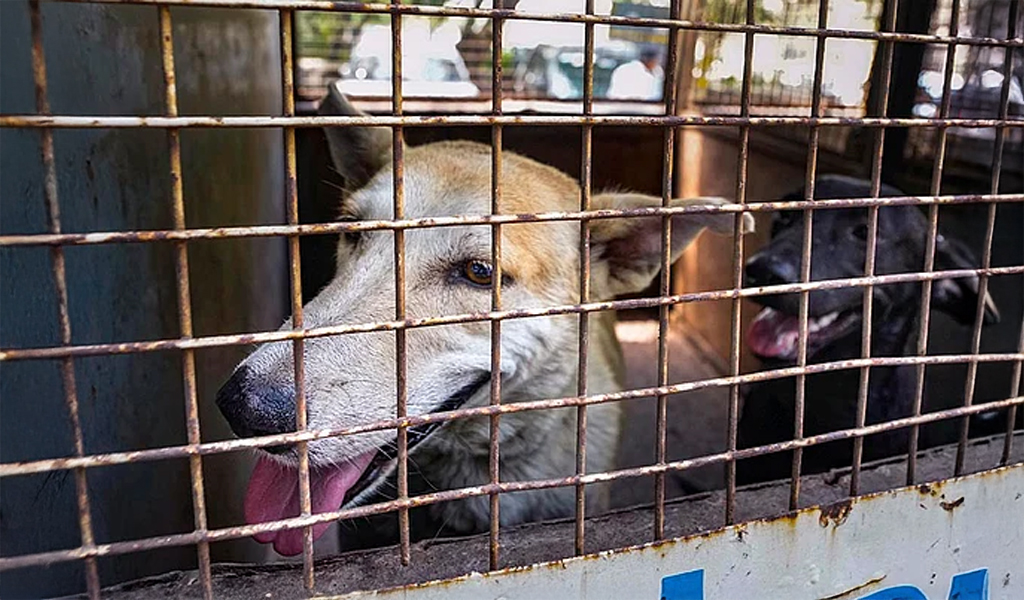
Dogs have been part of human life for ages and have been fulfilling roles such as friends, hunters, herders, police partners, and even sources of comfort. In Hinduism, dogs are often symbolised as loyal protectors and guardians of moral values. We can see them alongside Gods like Bhairava and Yama. India is home to an estimated 75 million dogs, including the free-roaming community variety. In the vibrant environments of Delhi NCR and other cities, many residents are kind to community dogs, however, there are people who are also wary of them. The reasons mainly being, rise in dog bites, rabies, and extreme territorial behaviours. Such circumstances stressed the ability of humans and dogs to co-exist. This got worsened after a recent ruling by the Supreme Court of India that called for the removal of community dogs from public areas, an event which sparked a heated discussion about public safety and the extent of animal rights in India. On 11 th  August 2025, the Supreme Court mandated the relocation of all street dogs in Delhi NCR to shelters. This order was altered on 22 nd  August 2025, which permitted the release of healthy and non-aggressive dogs back into their original neighbourhoods, while also banning feeding in public. This revised order seemed to be more scientifically sound, as it mandated sterilisation and vaccination before releasing the dogs. But, on 7 th  November 2025, the Supreme Court further directed the removal of stray dogs from educational institutions, hospitals, sports complexes, bus stands, depots, and railway stations, mandating their relocation to designated shelters after their sterilisation and vaccination under the  Animal Birth Control Rules, 2023 . However, from both a legal and practical standpoint, the ruling raises a significant challenge in animal welfare. Delhi stray dog population is estimated to be nearly one million, whereas existing shelters are not designed for long term confinement and are likely to become a hub for disease transmission, behavioural deterioration, overcrowding and violation of humane treatment of animals. Animal Rights advocates argue that the ruling is inconsistent with India’s legal framework,  The Prevention of Cruelty to Animal’s Act, 1960  and the  Animal Birth Control Rules, 2023  which emphasise on sterilisation, vaccination, and return-to-location as the scientifically proven method of population management. Numerous empirical studies in India and abroad confirm that relocation disrupts territorial stability and often leads to the  “vacuum effect”  compelling unsterilised, unvaccinated dogs to move in to the place left behind by the earlier dogs and leading to an increase in public health risks. The constitutional aspect adds another layer to the discussion. While Article 21 of the Constitution of India, 1950 guarantees the right to life and security, judicial decisions, particularly   Animal Welfare Board of India vs A. Nagaraja & Ors  ( 2014),    recognise that animals have inherent dignity and the right to live without unnecessary suffering. Article 51A(g) also requires citizens to act with compassion toward all living things. This judicial view was further supported by the Punjab & Haryana High Court in  Karnail Singh vs. State of Haryana (2009)  where animals were given legal status, and citizens were seen as responsible for their well-being. Therefore, any policy that involves a mass relocation of animals must be evaluated on the basis of this constitutional commitment of humane treatment of animals. International examples such as Thailand’s CNVR (Catch, Neuter, Vaccinate, Return) model and the humane programmes in Brazil and Bhutan show that long-term control of stray dog populations and related issues can be achieved through steady, evidence-based work rather than harsh or short-term measures. Indian cities like Jaipur, Lucknow and Dehradun have also shown strong results through consistent Animal Birth Control programmes supported by organisations like Humane World for Animals, India, proving that sterilisation, vaccination and regular monitoring make communities safer by using scientific technology. Public awareness, safe interaction training, designated feeding places, behavioural checks for high-risk dogs and quick response in problem areas in a transparent manner can further reduce conflict without removing dogs from their territories. The 2025 directives have drawn much-needed attention to long-standing gaps in animal management policy. At the same time, they highlight the urgent need to bring public- health practices in line with legal and ethical responsibilities. A framework guided by compassion and scientific principles will protect animals and will also help create safer and more stable cities. The intent is to not choose between human safety and animal rights, but to build a system where both can co-exist, while following constitutional values and global best practices.  

Read article
Digital Personal Data Protection Rules and the New Face of Indian Law in Digital Data Protection

19 Apr 2026

Digital Personal Data Protection Rules and the New Face of Indian Law in Digital Data Protection

The concept of digital privacy jurisprudence has majorly evolved from the judicial precedent laid down by the Hon’ble Supreme Court of India in  Justice K. S. Puttaswamy (Retd.) v. Union of India ,  (2017) 10 SCC 1 . It took no time for the judgment to become a key source for demanding clear and citizen-centric legislations from the Parliament for responsible use of digital personal data since digital technologies of communication, data storage and surveillance had become a part of citizens’ everyday life. Parliament acknowledged the inherently transglobal and multijurisdictional nature of digital data and cybersecurity concerns related to the invasion of digital privacy in the 21 st  century to frame essential safeguards that are required for protecting digital personal data. Maintaining the confidentiality of digital data became a subject matter of discussion at the Union Parliament and Legislative Assembly. Parliament’s journey continued to enact dedicated legislation for safeguarding confidentiality and protecting the digital personal data of citizens. The serendipity offered by the Hon’ble Supreme Court of India on the Indian Constitution in  Puttaswamy case  paved way for Parliament to comprehend the varied roles the concept of privacy found under Article 21 played and subsequently the Parliamentary enacted Digital Personal Data Protection Act, 2023 (DPDP Act) and Digital Personal Data Protection (DPDP) Rules, 2025 came into force to protect individuals fundamental rights and lawful digital data processing embracing the “Right To Privacy”. Combined reading of the Act and the Rules legislatively provides a citizen-centric framework for the responsible use of digital personal data. Per se, Indian citizens’ demand for socially important privacy protections and confidentiality of digital data is eventually at ease.     At present, digital data privacy laws and regulations highlighted in the preceding paragraphs enacted by the Indian Parliament are at par with the globally accepted digital data protection legislative regimes. In any event, the Hon’ble Supreme Court of India is urged to enlighten the countrymen with significant expansion of digital data protection legislative schemes beyond Parliamentary limits through constructive interpretation of the statutory provisions expressly mentioned under the DPDP Act and DPDP Rules, 2025. For inviting contrast and comparison, between “STOP. THINK. CONNECT”; a national awareness campaign initiated in the United States of America (U.S.A.), aimed to resolve cyber security threats in the U.S.A. a public awareness campaign program that was introduced to empower citizens to be safeguarded in cyber space by Barack Hussein Obama’s administration with the Department of Homeland Security (DHS); and our own “CYBER JAAGROOTKTA DIWAS”; wafted by the Ministry of Electronics and Information Technology (MeitY), spread headed through Information Security Education and Awareness (ISEA) programme; in collaboration with Indian Computer Emergency Response Team (CERT-In) and the Indian Cyber Crime Coordination Centre (I4C) under the Ministry of Home Affairs (MHA), had already been initiated to notify citizens that cyber security is a shared responsibility.

Read article
CLAT 2026: Everything You Need to Know

18 Apr 2026

CLAT 2026: Everything You Need to Know

CLAT 2026: Everything You Need to Know About Result Declaration & Scorecard Downloading Process. CLAT 2026 TIMELINE The Consortium of National Law Universities conducted the CLAT 2026 examination on 7th December 2025 across 156 centres in India. The application for examination was opened for a brief period from 1st August 2025, with its last date of registration being 7th November 2025. The Provisional Answer key was released by the Consortium on 10th December 2025. With further opening of its Objection Portal from 10th December 2025 to 12th December 2025 till 5 PM, the much-awaited CLAT 2026 results have now been officially announced. RESULTS ARE NOW LIVE! The CLAT 2026 examination results for both undergraduate and postgraduate programs are now available, and the successful candidates can download their scorecards directly from the official website of the Consortium. STEP-BY-STEP GUIDE TO RESULT ● Visit the official website:  https://consortiumofnlus.ac.in/clat-2026/ ● Click on the Result Link ● Enter your mobile number and password credentials ● Submit and download the scorecard UNDERSTANDING YOUR CLAT 2026 SCORECARD Your CLAT Scorecard displays information including: ● Students’ full name, parent details ● Roll number ● Marks secured ● All India Rank ● And Category-specific rank These credentials are essential for upcoming counselling rounds and admission procedures. WHAT NEXT? The eligible candidates will receive information about the counselling process for admissions to choose their preference from the National Law Universities participating in CLAT 2026. In totality, there are 5 rounds of admission counselling. The candidates have to fill preference and according to secured marks, they get a seat in the NLU. If a candidate is allotted a seat in NLU, he or she either has the option to “Freeze” the seat or can “Exit” within that round of counselling. The candidate can also “Float,” and can participate in subsequent rounds until the 4th round of counselling after which the candidate has option either to “Freeze” or “Exit.” If no option is exercised within specified time, in that case they will be considered as “Not interested” and their candidature will not be considered for admission in NLU. CLAT 2026 DATA ANALYSIS The Consortium of National Law Universities has released a press release dated 07.12.2025 stating that 92,344 candidates applied this year for the Common Law Admission Test (CLAT) 2026, out of which 75,009 candidates from the Undergraduate programme slot and 17, 335 for Postgraduate programme. Not only was the registration overwhelming, but also the turnout of 96.83% applicants for UG and 92.45% for PG. The highest marks secured in UG, as declared by the Consortium, are 112.75 out of 120. The participating National Law Universities are 24 in number, with NLU Delhi and NLU Meghalaya conducting their separate entrance examination, so the overall absorption rate is in accordance with total seats is 3952, with 44 % seats, that is 1752, for the general category and the remaining 56% reserved for other categories and domicile quota. EXPLORE YOUR OPTIONS While National Law Universities are premier institutions, several excellent CLAT-affiliated colleges also offer legal education with strong placements and academic excellence. Link:  https://consortiumofnlus.ac.in/clat-2026/affiliates.html ASIAN LAW COLLEGE, NOIDA Asian Law College (ALC), approved by Bar Council of India (BCI), NAAC accredited and a CLAT affiliated college, is one of the best colleges in Delhi NCR providing state of the art infrastructure, best faculty & placement and internship opportunities for its students. Asian Law College offers courses such as the 5 Years Integrated Degree Program of B.A. LL.B. and B.Com. LL.B. and 3 years LL.B. program. Asian Law College was recognised amongst the top 70 Law Colleges in India by INDIA TODAY 2025. INTERNATIONAL ALLIANCE Asian Law College has an exclusive tie up with the Faculty of Law of the prestigious University of Cape Town, South Africa where students get to have an international exposure with an eight days fully paid Educational Trip to the beautiful city of Cape Town where they undergo a practical workshop on International Law and Legal Framework. On the same lines, ALC has tied up with Radanks Ltd. London (a U.K. based mediation firm) to offer our students an International Mediation Certificate, through 45 hours of training under 10 days fully paid Educational Trip to London U.K. DIPLOMA & CERTIFICATIONS Along with its integrated degree programs, ALC offers specialized certifications and diplomas to students. ALC offers: ● Diploma in Cyber Laws, ● Diploma in IPR, ● Diploma in Media & Entertainment Laws, ● Diploma in Fashion Laws ● Certification in Personality Development & Legal Communication. Along with the state-of-art infrastructure and bigger than life events, ALC offers in-house All India Bar Examination Academy. START YOUR ADMISSION PROCESS TODAY! 1. Visit the Asian Law College website  https://alc.edu.in/ 2. Book a Counselling session 3. Complete the application Process via the link https://alc.edu.in/online-application-form/ For any queries contact Asian Law College, Plot A2, Block C, Sector 125 Noida – 201303 Delhi NCR, India Email: info@alc.edu.in Tel.: 9205579429

Read article